There is no one-size-fits-all format … It’s an interesting challenge to find the balance between helping an author hone their unique writing style while offering writing advice and considerations for their goals (audience, marketing strategies.).
In addition to being an English co-ordinator and elementary teacher, Stewart O. Dunn writes and publishes picture books. A popular coach, she guides authors and illustrators in their creations and makes public appearances to share her stories. In this blog, Stewart provides a glimpse into some of her offerings, shares her stories, and provides tips for authors who want to get their stories out there.
Lyndi: How did you come to write stories for little people?
Stewart: The little people requested it! While teaching first grade I was always molding my lessons to fit the resources available. Since my little learners were ESL students, I was picky and intentional about the accompanying stories I included in my lesson plans. When we were discussing the three R’s in science (reduce, reuse, recycle), I couldn’t find a story that discussed pollution the way I wanted it to for my kids, so while explaining this to my students, one said, “Well, why don’t you just write it?” The innocence in the question, and knowing they truly believed I could, gave me the spark I needed to get started and write my first book, Nico’s New Necklace.
Lyndi: What is your writing process? Do you start with an idea or does your character or plot appear first to share their story?
Stewart: All four of my books go back to a scene witnessed with my students. It’s amazing because I get realtime insight into my audience’s mind about what they worry about, care about, think about, etc. For example, I was watching the students during recess when I saw a recurring scene: child enjoying lunch, bee also interested in lunch, child spots bee and freaks out. How could I help them understand bees and fear them less? That question turned into, Daisy’s Busy Day.
Lyndi: The Breath Book lightheartedly guides readers on how to train their brain with mindful breathing practices to strengthen their inner power. Why do you feel this is important for young readers to learn?
Stewart: Small humans feel BIG emotions! Those emotions can be tough to process (even for us adults!). It’s truly like a super power to realize you’re the driver of your brain, not whatever strong emotion has emerged. When I started incorporating different mindfulness techniques with my students, I saw how they looked forward to those moments during the day (we’d start our mornings with one and after lunch when they were balls of energy we’d do another to re-focus ourselves). I had a student in my class one year who would work himself into such a frenzy he’d vomit. He missed his mom and wanted to go home every day. I came into my class after snack one morning and saw him crying at his seat like usual, but I also saw his seatmate kneeling beside him, hand on the crying boy’s stomach, guiding him through some slow breaths. I was in shock and awe. I didn’t interrupt and by big breath #10 he was still a bit sad, but nowhere near something warranting a trip to the nurse or a call to mom.
Lyndi: Your stories playfully share messages with young readers like cleaning up their trash after spending a day at the beach. Do picture books need to share valuable lessons?
Stewart: I find many successful children’s books do share a message. Some of the best do so in the most subtle of ways. If you want to include a lesson and you shout and “preach” in your writing, your story isn’t strong enough and/or you’re not trusting your readers.
Although a valuable lesson isn’t necessary, a children’s book should offer readers something, and that something doesn’t have to always be instructional. That something can just be a feeling (comfort, silliness, curiosity, etc.). The book that comes to mind immediately is Goodnight Moon by Margaret Brown. It is a huge success all while capturing a gentle bedtime ritual. It provides a feeling of comfort in familiarity.
Lyndi: Which of your characters is your favorite and why do they stand out to you?
Stewart: Phew, I have to pick a favorite?! If I must, I’d say Daisy. During my research and writing phase I took beekeeping classes and met with beekeepers. I was a student and a beginner in the world of bees, and I loved that feeling. Daisy taught me to fear her less as well, and introduced me to the intricate, amazing world of bees.
Lyndi: When visiting schools or libraries, what kinds of interactions do you have with the children and their caregivers?
Stewart: Most of the time I visit schools for a storytime setup. I read one of my stories the librarian or teacher selects beforehand, and then we discuss the topic and have some time for author Q&As. The best visits are to schools whose educators talk about the visit beforehand. I feel like a celebrity and the students truly feel they’re meeting someone special. There’s nothing worse than walking into a classroom and the students having no idea who you are or why you’re there.
Kids are hilarious … and super observant and smart. I get questions that range from the most random, personal kinds, to questions in which I must admit I don’t know the answer. I always thank those who bring a question to me that requires more research. It reminds them we are always students.
I also have a wide range of experiences considering I perform visits in English, and some in Spanish (okay…Spanglish). Personally, nothing beats sharing in my native language, but there’s a fun challenge the Spanglish visits offer. It’s another way to show young ones we are always learning and that learning involves mistakes.
Lyndi: Tell us about some of your experiences working with illustrators.
Stewart: Phew. I’ve been on a roller coaster ride or two, but overall I’ve had the most amazing experiences collaborating artistically with illustrators. For the less-than-ideal situation I’ve reflected on what went wrong and how I can avoid those issues in the future (more research on my end and make an even stronger, clearer contract).
When I work on a story I always visualize it as well. I can’t separate the two. This means that when it comes to the illustrations I like to take an active role in the process. So, I have to find and work with illustrators who are open to my input/art notes. I always respect their visions as well and love hearing their opinions, too. I don’t like to be super rigid to leave space for ideas I haven’t considered and to allow their artwork and skills to shine in the visual area!
Over time, I’ve sharpened my abilities to balance my text with visuals and take advantage of each rather than allowing repetition or empty words/visuals. This is useful because it helps me write stronger stories and makes the relationship between author and illustrator smoother.
I’m lucky to work with such talented artists who offer their unique styles. They’ve brought my visions to life and made them better than I could’ve imagined.
Lyndi: What advice would you give authors who are considering creating their own illustrations or seeking an illustrator?
Stewart: I’ve never created my own illustrations, but if I toyed with the idea I would absolutely become a student and practice, practice, practice. Take a class, get a mentor, research different styles and see which resonates most with you. During this, also investigate existing (and successful) children’s books related to that style and see what makes their work look and feel professional. Read the comments of buyers and see what they like and dislike. Accept that your first draft…or first ten…most likely won’t be the final version (and allow that truth to let yourself play and make mistakes). Your readers deserve high quality and you’d hate for your story to be overshadowed by questionable illustrations.
If you’re looking to work with an illustrator you need to ask yourself some questions before you contact any of them. What style are you envisioning (watercolor, digital, anime, whimsical, etc.)? What’s your budget? Timeline? What level of involvement do you want in the process? … just to list a few.
Lyndi: In addition to writing and publishing your children’s picture books, you coach others who want to share their stories. What does coaching authors through their writing process look like?
Stewart: There is no one-size-fits-all format. Every process begins with a detailed conversation to truly understand where they are at (some come to me with just a dream, others with an idea, and some with an almost completed manuscript) and what their goals are related to writing and publishing. Once those details are established we reference that information constantly throughout the process to be sure decisions align with the goals in mind.
It’s an interesting challenge to find the balance between helping an author hone their unique writing style while offering writing advice and considerations for their goals (audience, marketing strategies, etc.). It’s not always smooth. Writing, like all art forms, is personal. And when it’s personal it can be tough to deliver and receive feedback. At the end of the day the authors I work with know they are the ones who make any final decisions. It’s their dream, and I’m here to help make it the best it can be.
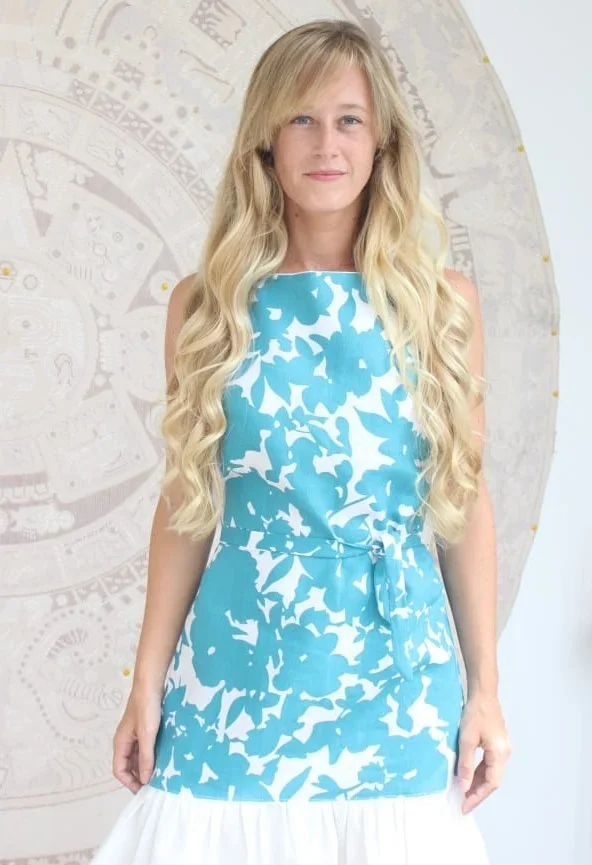
Stewart O. Dunn spent years as an English coordinator and elementary teacher in Panama City, Panama. Stewart loves living in a place where she can enjoy both the Pacific and Atlantic Oceans in the same afternoon! She splits her time between Central America and Kentucky.
She has a bachelor’s in both communications and social work, as well as a master’s in international affairs.
Her love of children and the environment inspires much of her work. When she is not writing, she can be found at the beach, skateboarding with friends, or having deep conversations with her three cats.
https://www.facebook.com/stewartodunn/
@stewartodunn
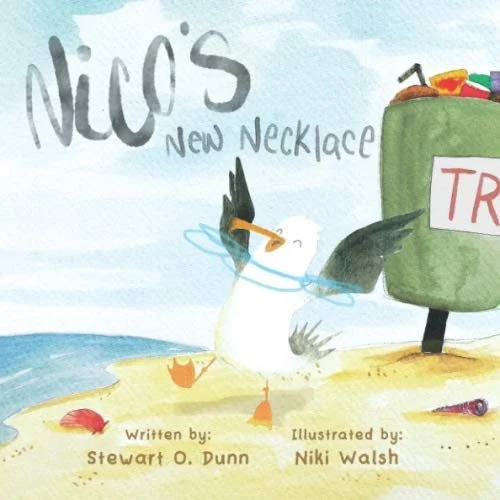
NICO’S NEW NECKLACE
NICO THE BIRD MUST BE HEARD!
Nico loves his seashell treasures. But when the humans arrive at the beach, they bring their own treasures.
Nico puts on a necklace he finds and discovers these treasures are not what they seem. These birds have a pollution problem!
Help Nico decide what is treasure, and what is trash. What will happen with Nico’s New Necklace?
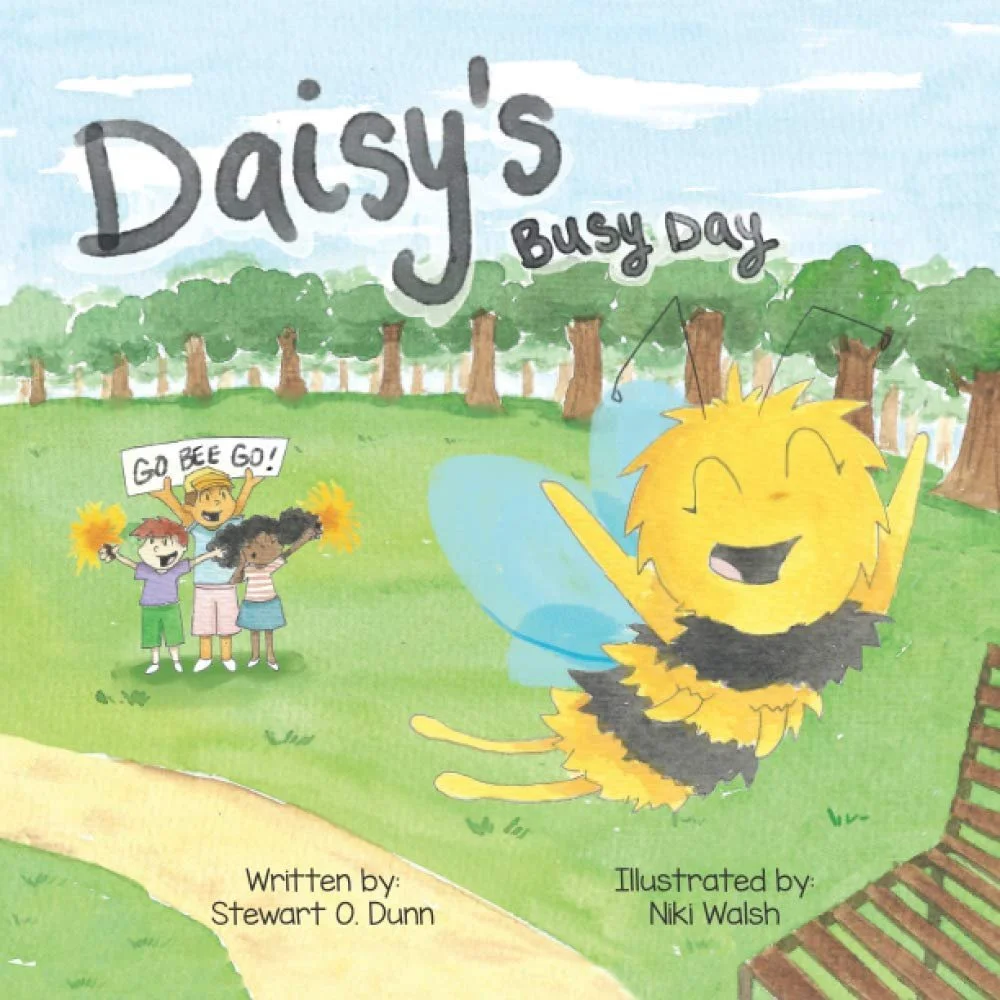
DAISY’S BUSY DAY
Hip, hip, hooray, for Daisy’s busy day! Daisy may be little, but she has big responsibilities. She works hard every day to keep our ecosystem healthy, but being a bee is not an easy job. There are many dangers around Daisy and her friends. Help the humans cheer for Daisy and learn how our world would be very different if we did not have the super bees. This beautifully illustrated book offers a light way to discuss ecological topics with children. Allow the loveable bee to help change children's perceptions toward this amazing animal. Bees shouldn't be feared, but appreciated!